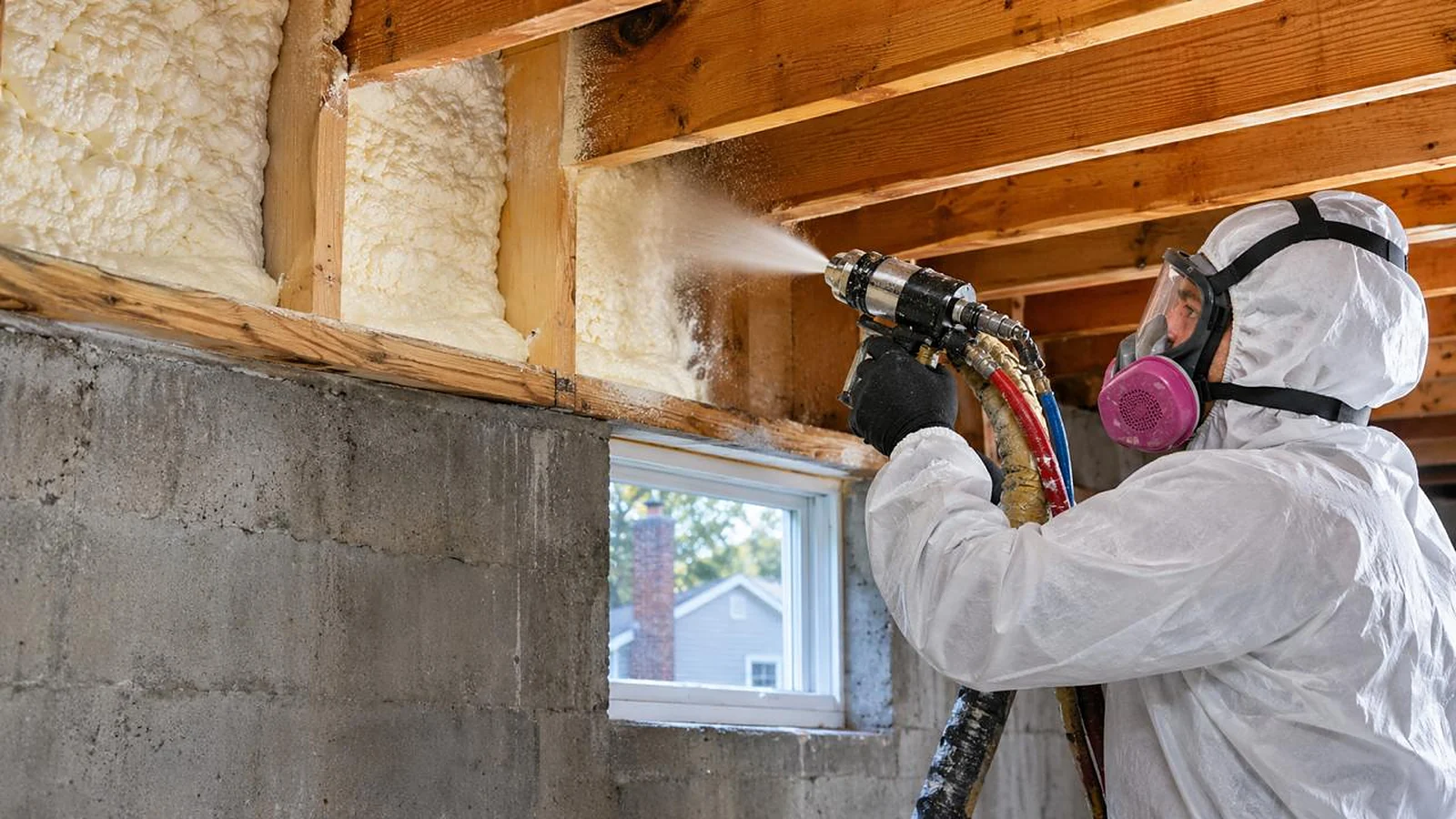
Spray Foam Insulation in Boston, MA
Closed-cell on the rim, open-cell where it belongs, and an install that is measured rather than promised. Free matching with local contractors.
Prefer to talk? (857) 413-5707
Tell us what you are trying to fix. We pass your request to local installers who do that work; they quote you directly. No obligation, no charge to you.
| Job | Published rate |
|---|---|
| Open cell, installed | $0.45 – $0.75 / board foot |
| Closed cell, installed | $1.00 – $1.50 / board foot |
| Rim joist, about 150 ft perimeter, 10 in band | $400 – $650 |
| Rim joist on a larger or more open basement | $1,200 – $2,800 |
| 1,000 sq ft attic floor, open cell | $1,200 – $1,800 |
| 1,000 sq ft attic floor, closed cell | $1,800 – $2,500 |
| 1,000 sq ft roof deck, open cell | $3,000 – $5,000 |
| 1,000 sq ft roof deck, closed cell | $4,500 – $7,000 |
Ranges come from published price lists of Massachusetts insulation contractors; your quote depends on access, depth and what has to be removed first.

The dense, structural foam. It insulates, air-seals and adds rigidity in one pass.

The softer foam, cheaper per inch, and unforgiving about where you put it.
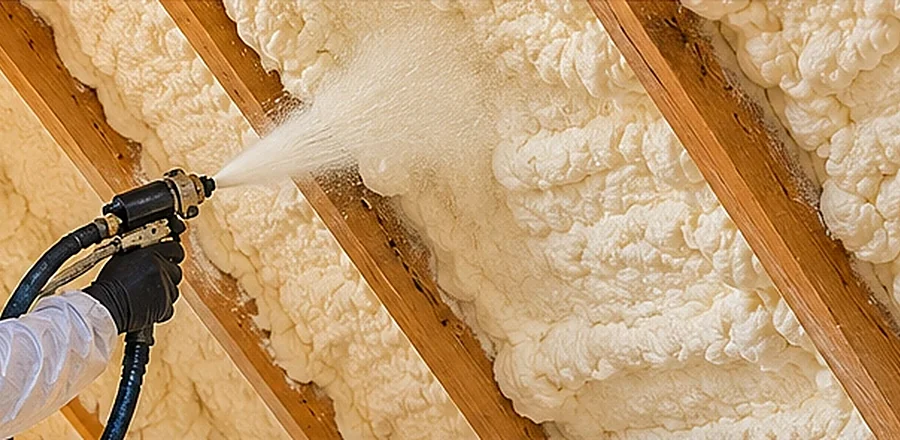
Most Boston attic problems are air problems wearing an insulation costume.
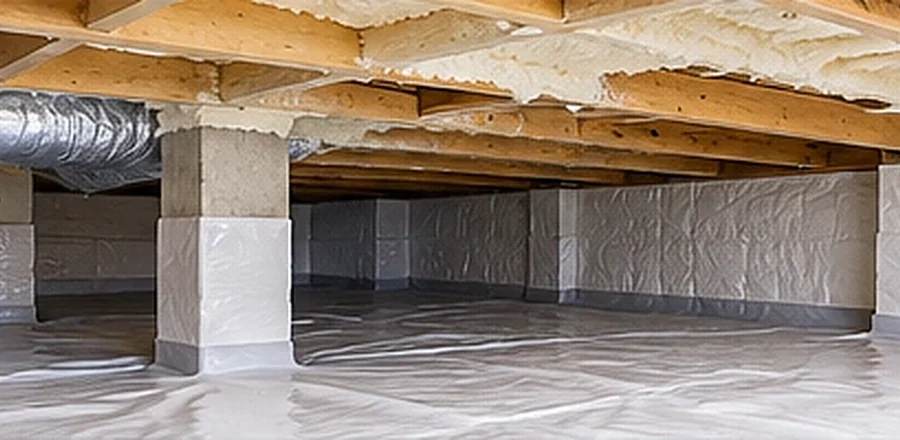
A vented crawlspace under a Massachusetts house is a cold, damp box attached to your floor.

The sill sitting on the foundation is where most of the heat leaves an old Boston house.
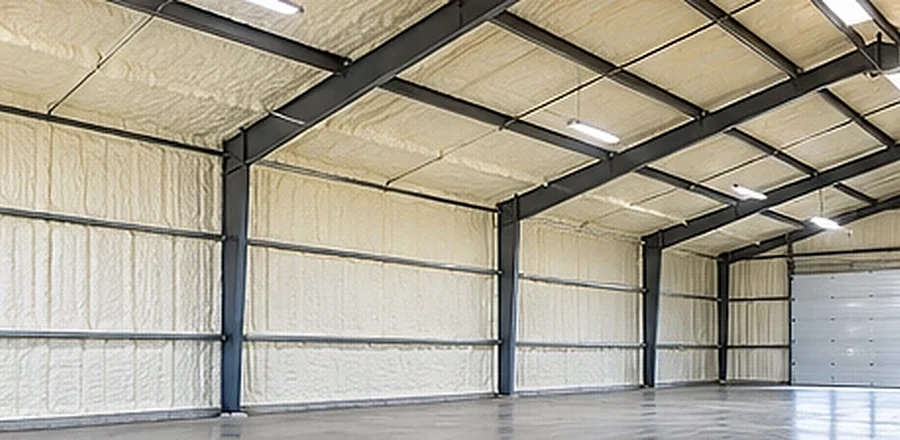
Sometimes the honest quote includes taking something out before putting anything in.
Boston and the inner core, from the North Shore edge to the Neponset.

An ice dam is not a roofing problem, even though that is where the water shows up.

The upstairs is colder than the downstairs in most pre-war Boston houses, and the reason is usually not that the upstairs has less insulation.
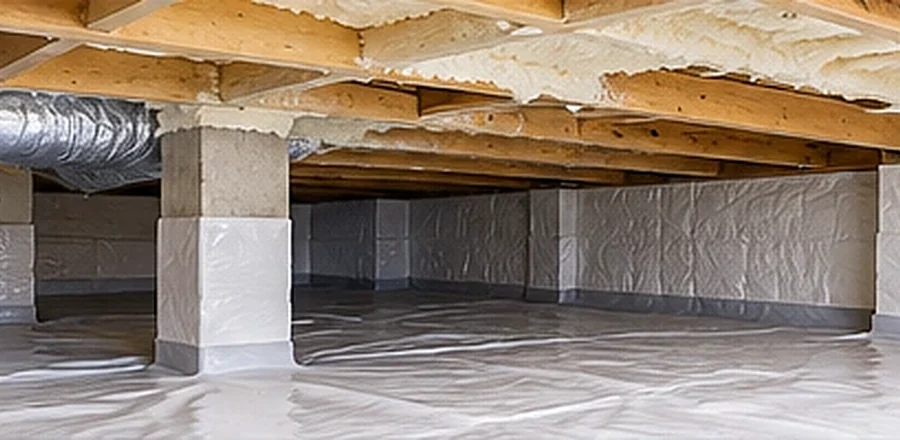
The smell is not the concrete.

In a pre-war Boston house the rim joist is usually the largest single air leak in the building envelope, and it is almost always invisible.
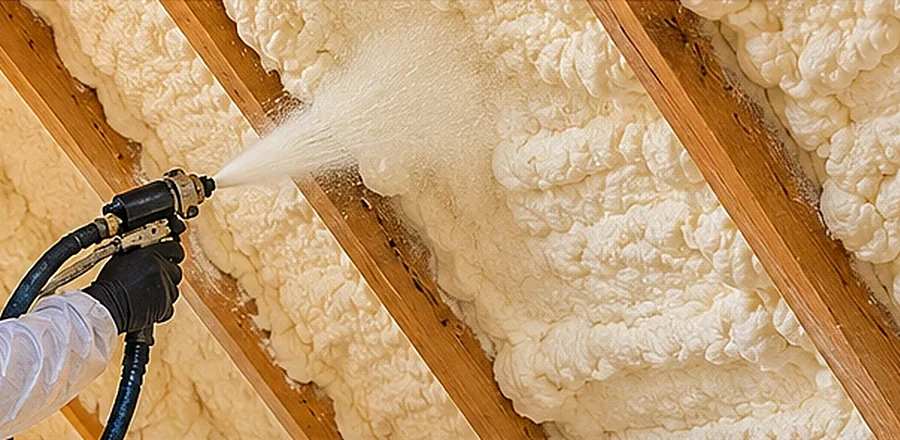
Water on the inside of a window in January is a humidity and surface-temperature problem, not a leak.
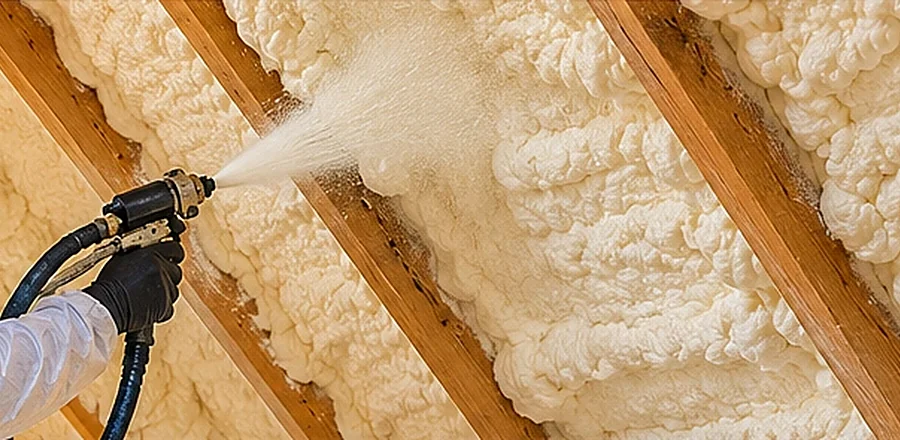
Loose-fill settles, batts slump, and both lose performance when they are installed badly.

Board feet in, published price bands out, before anyone visits.
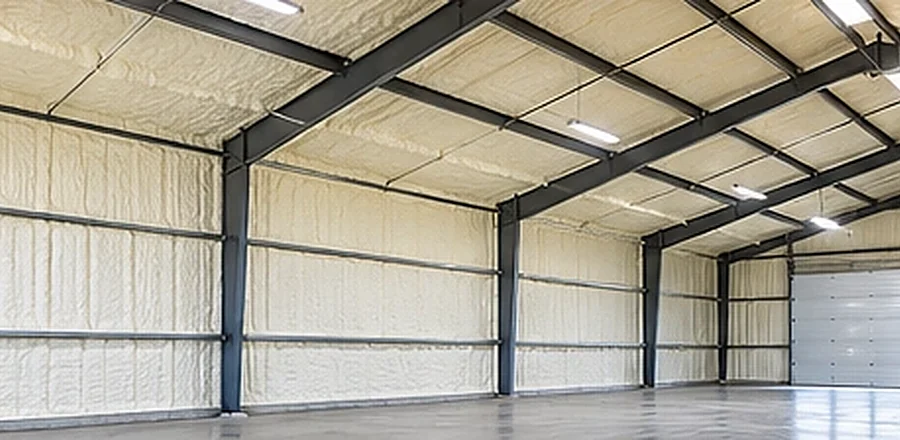
How many inches of open or closed cell reach your target R-value.

Four questions that decide which foam belongs in your assembly.
Closed cell is dense, adds structural strength, resists water vapor and delivers roughly 6.5 to 7 R-value per inch. Open cell is lighter, cheaper per inch, lets vapor through and delivers roughly 3.5 to 3.8 R-value per inch. The material follows the assembly, not the other way round.
Foam does not create moisture, but it can trap moisture that is already there. Spraying over damp wood or an active leak is how a job goes wrong. The preparation and a dry substrate are the parts that matter, which is why a contractor who wants to spray over a wet wall is a red flag.
Yes, and old houses are where it earns its price - rim joists, balloon-framed walls, furred masonry. The constraints are knob-and-tube wiring in the cavity, vermiculite in the attic, and lath-and-plaster walls that need a low-expansion material so the plaster does not crack.
Installed correctly it lasts the life of the building and does not settle or sag the way loose fill does. It can be damaged by UV if left exposed, which is one reason it gets a thermal barrier in occupied spaces.
The material is tested and rated as a component, and in most occupied spaces it must be covered with a thermal barrier such as drywall. Exposed foam in a basement ceiling is a common code question - ask what covering your assembly needs.
Thick enough to reach the target R-value for that assembly. An attic ceiling, a rim joist and a roof deck all have different targets. The number of inches is an output, not an input.
Air-sealing the ceiling plane removes the cause of most ice dams by keeping warm air out of the attic. The foam has to be part of an air-sealing scope, not sprayed over an open bypass.
Yes, particularly open cell in floor-ceiling assemblies. It is a real benefit in a triple-decker where the complaint is footsteps and conversation.